Digital wealth can be the easiest part of a portfolio to grow—and the hardest for a family to access when something happens. From crypto held on an exchange to tokens sitting in a cold wallet, the operational details matter as much as the legal documents. That is especially true for expat families where succession rules and probate processes may differ from what you expect; understanding UAE inheritance law for expats is a sensible starting point before you assume your digital holdings will transfer smoothly.
This guide focuses on the practical, often-missed issues around wallets, access, custody and succession so your digital holdings can be administered like any other asset—without turning your security setup into a single point of failure.
What “digital assets” means (it’s more than crypto)
In estate planning, “digital assets” can include anything that is (a) valuable, (b) controlled by credentials or cryptographic keys, and (c) not easily proven or transferred without technical steps. Common examples include:
- Cryptocurrency and stablecoins held on exchanges or in self-custody wallets
- NFTs, domain names and other tokenised rights
- Tokenised funds or alternative investment platforms using blockchain rails
- Online brokerage or fintech accounts that require app-based authentication
- Digital business assets such as admin logins, cloud storage, revenue dashboards, and subscription accounts
The common theme is control: without the right authentication, your executor can have a court order and still be unable to access the asset.
Why digital assets get missed in estate plans
Families and investors often have “a will” but no workable route for someone else to locate, verify, access and transfer digital holdings. The typical failure points are:
- No complete inventory: assets are spread across apps, devices, chains and accounts, and only the owner knows what exists.
- Security blocks administration: 2FA tied to a personal phone, passkeys, hardware wallets, or seed phrases stored “somewhere safe” that no one can find.
- Authority is unclear: even when credentials exist, the legal authority to use them (and to instruct exchanges) may not be properly documented.
Key idea: A digital estate plan is not about sharing passwords. It’s about creating a controlled, lawful way for the right people to act at the right time.
The four pillars of effective digital assets in estate planning
1) Create a living inventory (that someone can actually use)
A useful inventory is more than a list of coins. It should allow a trusted person to identify what exists and how it is held without exposing keys unnecessarily. Consider documenting:
- Where each holding is kept: exchange name, wallet type, custodian, network (e.g., Ethereum), and any relevant account IDs
- Whether the asset is personal or held via a company, trust, or investment structure
- How access works: hardware wallet model, vault provider, multi-signature setup, and recovery method
- What “actions” are needed: unstaking, claiming rewards, closing DeFi positions, or renewing domains
Keep the inventory updated. A digital estate plan that was accurate 18 months ago can be unusable today.
2) Separate “knowledge” (what exists) from “control” (how to move it)
Many families make the mistake of putting seed phrases in a will or emailing instructions. That can create theft risk, invalidate security assumptions, and in some jurisdictions create legal or evidentiary problems.
A better approach is to separate:
- Discovery information (asset map, account locations, contact points, and high-level instructions)
- Transfer control (seed phrases, private keys, device PINs, and 2FA recovery)
Discovery information can sit with your lawyer or in a secure estate folder; transfer control should be handled with stronger operational safeguards (see below).
3) Match the custody model to your succession plan
How you hold an asset determines how it can be inherited. Broadly:
- Exchange custody: easier for heirs to work with if the exchange has a clear deceased-user process, but it depends on platform policies, KYC, and jurisdiction.
- Self-custody (hot or cold wallets): you control the keys, but your estate must have a secure method to recover them. If the keys are lost, the asset is typically unrecoverable.
- Third-party qualified custody / institutional solutions: may offer more formalised access procedures and governance, but can be more complex and costly.
- Multi-signature arrangements: can reduce single-point-of-failure risk and allow structured handover (e.g., 2-of-3 where one signer is a trusted professional or family office).
There is no universal “best custody.” The right answer depends on your risk tolerance, the size of the holding, family dynamics, and cross-border administration complexity.
4) Build a secure access and recovery plan (without weakening security)
Estate planning fails when heirs cannot pass basic authentication. Common blockers include a locked phone, lost authenticator app, or a hardware wallet stored in a location nobody knows about.
Practical ways to improve recoverability without handing out sensitive information include:
- Using a reputable password manager with an emergency-access feature and clear instructions for your executor (for general account access, not seed phrases)
- Maintaining a documented 2FA recovery route (backup codes stored securely, separate from the primary device)
- Considering split-key or threshold approaches for high-value wallets so that no single person holds everything needed to move funds
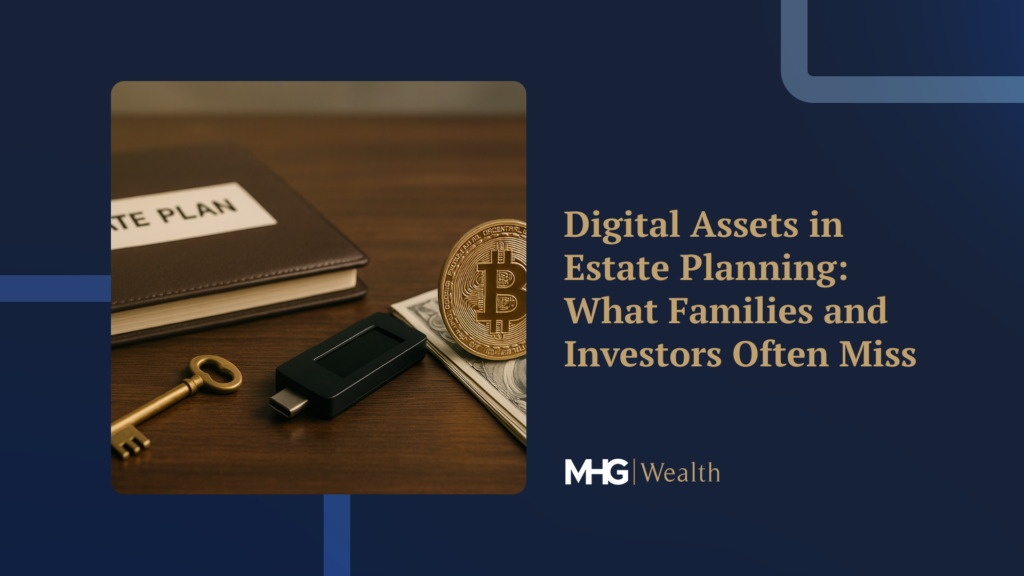
- Ensuring your executor can locate devices and understand what they are (hardware wallets are often mistaken for USB drives)
For general account security and credential storage hygiene, guidance such as the UK National Cyber Security Centre’s advice on using password managers can be a useful baseline.
Executor reality: what actually has to happen after a death
Even with a will, administering digital holdings usually requires a sequence of operational steps. A short “executor runbook” can save months of delay. It should cover:
- Who to contact first (lawyer, executor, wealth manager, family office, custodian)
- Where the inventory is stored and how to access it
- Which assets must not be touched until legal authority is confirmed (to avoid allegations of unauthorised access)
- How to secure devices immediately (phones, laptops, hardware wallets) to reduce theft risk
- How to deal with time-sensitive positions (e.g., lending, leveraged DeFi, expiring domains)
Where possible, test the plan. A controlled “tabletop exercise” (without moving funds) can reveal missing pieces such as unclear device PINs, unknown passphrases, or outdated account email addresses.
Common holding types and what families should do differently
Exchange accounts
Exchanges typically require documented proof of death and proof of executor authority, and may have jurisdiction-specific rules. Families should:
- Document which exchange(s) are used, the registered email/phone, and KYC status
- Record whether the account has sub-accounts, APIs, or linked wallets
- Keep an eye on where the exchange is regulated and what documents it accepts for estate claims
Also consider that an exchange account is not just “a wallet”—it is a contractual relationship governed by terms of service that can change.
Hardware wallets and self-custody seed phrases
With self-custody, the estate’s main risk is not market volatility—it is permanent loss through missing keys or unclear instructions. The plan should specify:
- Where the seed phrase is stored (and in what form)
- Whether there is an additional passphrase (and how it is recovered)
- Which networks and wallets are used (to avoid confusion during recovery)
Avoid leaving a single sheet of paper as the only recovery method if the holding is meaningful. Consider layered recovery that balances theft risk with survivability.
Multi-signature wallets, family office governance and larger portfolios
For larger or more complex holdings—especially where digital assets sit alongside private markets, hedge fund exposure, structured solutions or other alternatives—succession should be designed as part of the broader governance framework, not bolted on later. This is where professional alternative investment planning can help integrate operational controls with the rest of the wealth structure and reporting.
Staking, lending and DeFi positions
Digital assets can generate yield, but they also introduce operational steps that an executor may not understand. Document:
- Where assets are staked or lent and the unlock/unstake process
- Any smart contract risks or liquidations that could occur if collateral ratios move
- How rewards are claimed and where they accrue
If an executor cannot manage these positions, consider whether they should be closed or simplified as part of your “in case of incapacity” plan, not only in a death scenario.
Cross-border families: jurisdiction, probate and succession friction
Digital holdings often cross borders by default: the owner lives in one country, the exchange is incorporated in another, the server is elsewhere, and the assets sit on a global network. That creates friction around documentation, authority, and timelines. If you have multiple residences, citizenships, or assets in more than one country, planning should be coordinated with your wider approach to estate planning for cross-border assets so that executors aren’t forced to navigate conflicting rules while accounts remain frozen.
In the UAE context, many expats also consider where to register wills and how to ensure instructions are enforceable and practical. For example, the DIFC Wills Service provides an official framework that may be relevant depending on your circumstances, assets and family situation.
A practical checklist to reduce risk (without oversharing)
Use the checklist below as a starting point when organising digital assets in estate planning:
- Inventory: maintain an up-to-date list of wallets, exchanges, custodians, and key devices.
- Role clarity: name the executor(s) and identify who is expected to handle technical recovery versus legal administration.
- Access map: document where passwords live, how 2FA is recovered, and what devices are required.
- Key protection: avoid single points of failure; consider multi-signature or split recovery for significant holdings.
- Immediate actions: include guidance on securing devices and notifying custodians after a death.
- Valuation and records: keep transaction histories and cost basis information to reduce disputes and administrative delays.
- Review cadence: update after any major change—new exchange, new phone number, new wallet, or new residency.
FAQs
Should I put my seed phrase or private keys in my will?
Usually not. A will can become accessible to people you did not intend at various points in the process, and it may be stored or shared in ways that increase theft risk. Most families are better served by keeping legal instructions in the will and storing access materials via a separate, controlled mechanism that your executor can lawfully use when required.
Is naming a beneficiary on an exchange enough?
It helps where a platform supports it, but it rarely covers everything. You still need a full inventory, documented authority for the executor, and a workable plan for 2FA and account recovery—plus clarity on what happens if the exchange is unavailable, changes policy, or requires specific court documentation.
What’s the biggest operational mistake families make?
Assuming someone can “figure it out” later. Without clear instructions and recovery routes, executors can spend months trying to locate accounts and devices, or may never gain access at all—particularly with self-custody holdings.
How often should I review my digital estate plan?
At least annually, and immediately after any material change: new wallet, new phone number, new 2FA method, switching exchanges, moving countries, or changing your family or business structure.
Bringing it together
Digital wealth is now a mainstream part of many alternative portfolios, but it behaves differently at the moment it matters most: when someone else must administer it. By documenting what you own, designing a secure access pathway, and aligning custody with your legal structures, you can make your digital holdings transferable rather than trapped behind good security.